What are Horse Bridles?
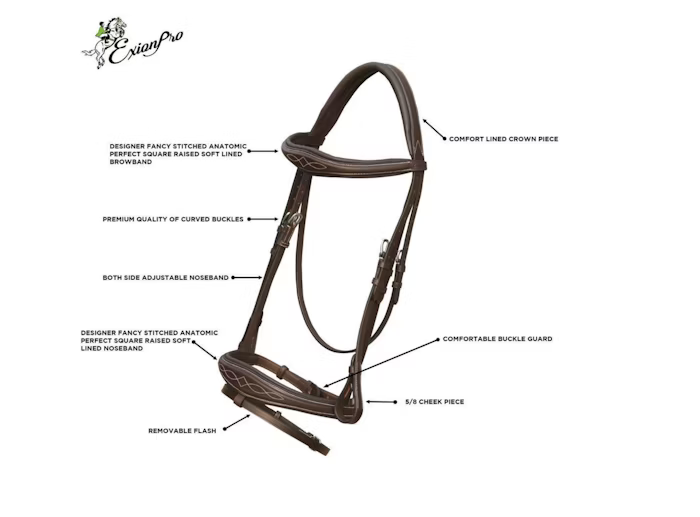
A bridle is the most basic part of the horse’s headgear. It is used to direct a horse. The
bridle is the main source of communication and control with the horse. It comes in
different sizes: pony, cob, horse, and oversized. When choosing a bridle for your horse, it
must be properly fitted to your horse’s head; otherwise, he’ll be uncomfortable, and your
aids will not be communicated effectively.
Types of Horse Bridles
One can majorly categorize the bridles into two types – English Bridles and Western
Bridles. The most obvious difference in their use is the discipline in which they are both
used. English Bridles are used in the English Riding discipline, and Western Bridles in the
Western Riding discipline.
Two primary varieties of English bridles are single or Snaffle bridles and double bridles.
A single bridle has one bit and one set of reins and is used with inexperienced riders. A
double bridle has a couple of bits and two collections of reins. A bridle without a bit is
described as a Hackamore. The English snaffle bridle is the most uncomplicated.
Parts of an English Bridle
The bridle consists of the following elements:
Crownpiece
This is the central thing that holds the bottom of the bridle in place.
It holds behind the horse’s ears. It is the main strap that holds the remaining parts
of the bridle in place.
Browband
The crownpiece goes within the browband. The browband goes
from just under one ear of the horse, over the forehead, to present below the
other ear. The browband prevents the bridle from sliding back, toward the horse’s neck. In individual sports, such as Dressage, beautiful bling browbands are very
fashionable.
Noseband
The noseband surrounds the nose of the horse. It is usually used to
keep the animal’s mouth closed or to add other pieces of material, such as
martingales. The noseband consists of a long, thin strap, which is placed under
the bridle headpiece, and the loop for the nose. The nose buckle goes below the
nose, while the large leash clasp is on the left side of the bridle.
Cavesson
A cavesson is a specific type of noseband used on English bridles
wherein the noseband is attached to its headstall, held onto the rest of the bridle
by the browband.
Throatlatch
It goes from the horse’s right ear, under the horse’s throatlatch,
and attaches below the left ear. The throatlatch buckles below the throat area,
keeping the bridle in the yard by not leaving it to go too far ahead. A throatlatch
should not be tightened too tightly, as the horse requires additional room to flex to
breathe. The main objective of the throat latch is to prevent the bridle from getting
off above the horse’s head, which can happen if the horse rubs its head on an
article, or if the bit is under in the horse’s mouth and tightened reins propose it,
loosening the cheeks.
Cheek Pieces
The cheekpieces continue the bit. Change the buckles on the
side of the horse’s crest as evenly as feasible, but opt for a decent bit of height
first. A snaffle bit should remain in the mouth’s interdental location (between the
sets of teeth)
Reins
Thereins of a bridle attach to the bit, below the attachment for the
cheekpieces. The reins are the rider’s link to the horse and are seen on every
bridle. Reins are often laced, braided, have stops, or are made of rubber or some
other tacky material to provide extra grip.
Bit
The bit goes inside the horse’s mouth, holding on to the delicate interdental
space between the horse’s teeth. Leather rings are used to
hold the cheeks of a full-cheek snaffle.
Flash
A flash is a thin strap attached at the centre of a regular noseband and
secured under the horse’s chin. It is supposed to stabilize the bit in his mouth and
prevent him from crossing his jaw or putting his tongue over the bit. It is also used
to keep the horse’s mouth closed and to keep the horse from crossing his jaw.
Types of English Bridles
Snaffle bridle
The snaffle bridle is the most commonly used because of its versatility and functionality.
The snaffle bridle can be used for most English disciplines, including jumping, dressage,
and trail riding. It can be used with a snaffle bit or with a Pelham or curb bit.
It consists of one bit and one set of reins. The noseband of a snaffle bridle is designed to
rest just below the cheekbones on the horse’s face. It has two rings on either side to
which the reins are attached and is usually jointed, with a link in the middle of the
mouthpiece. The noseband keeps the horse’s jaws aligned and prevents the horse from
opening its mouth wide enough to avoid the bit and rein aids. When adjusted properly-
not too tightly or too loosely —the noseband also transfers some of the bit pressure from
the bars of the horse’s mouth to the nasal bone.
This bridle is observed in many English disciplines as well as with horse jumpers. The
English snaffle bridle evermore has a cavesson noseband and, notwithstanding the
name is used with many various types of bits. A snaffle bridle consists of many
types of single snaffle bits, such as egg butt, loose ring, or D-ring snaffle, Kimberwicks,
gag bits, and curb bits, a single set of reins attached to that bit.
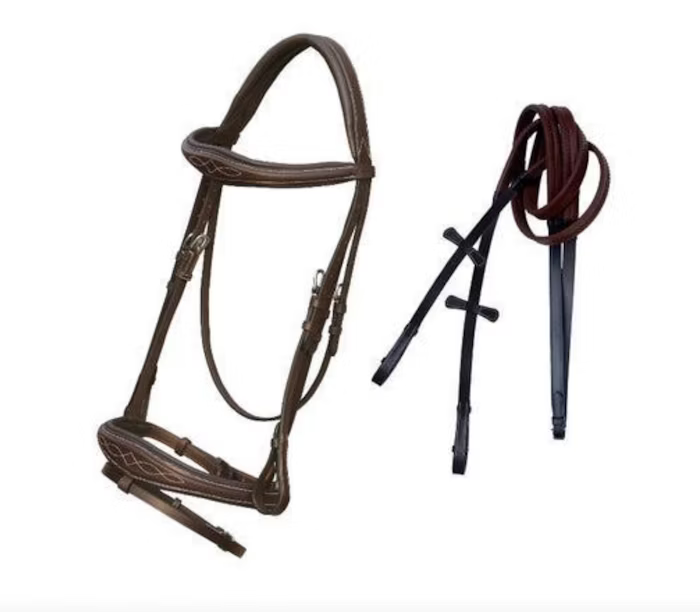
Dressage Bridle
Dressage bridles are traditionally black, which coordinates with black dressage saddles,
but you will see brown tack in dressage occasionally. Dressage bridles are generally
padded bridles with flash nosebands. Nosebands can be either a regular buckle or a crank
style. Anatomic Dressage Bridle is a huge trend, with large variations in design and lots
of shine and bling!
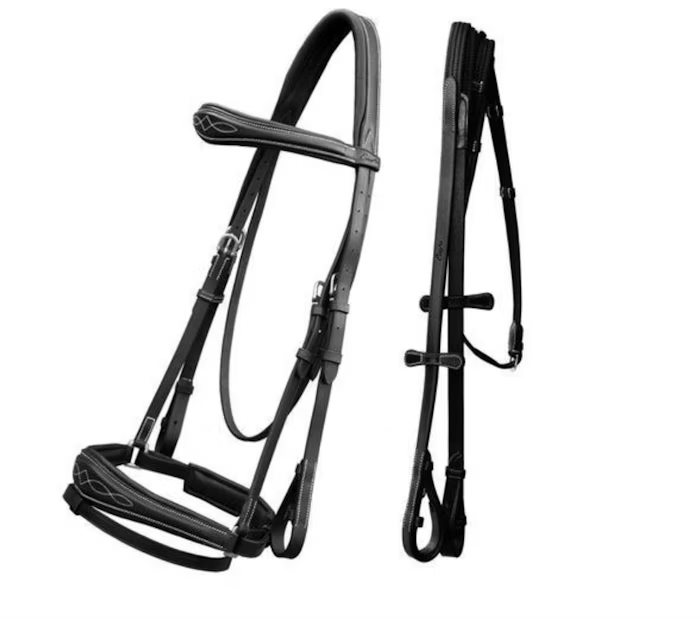
Figure 8 Bridles
Figure 8 bridles have a noseband that crosses from the top of the cheek on one side to
the chin on the other side. This forms a figure 8, after which the bridle is named. A Figure 8
bridle keeps the horse’s mouth closed, or allows the horse to have more airflow through
the nose.
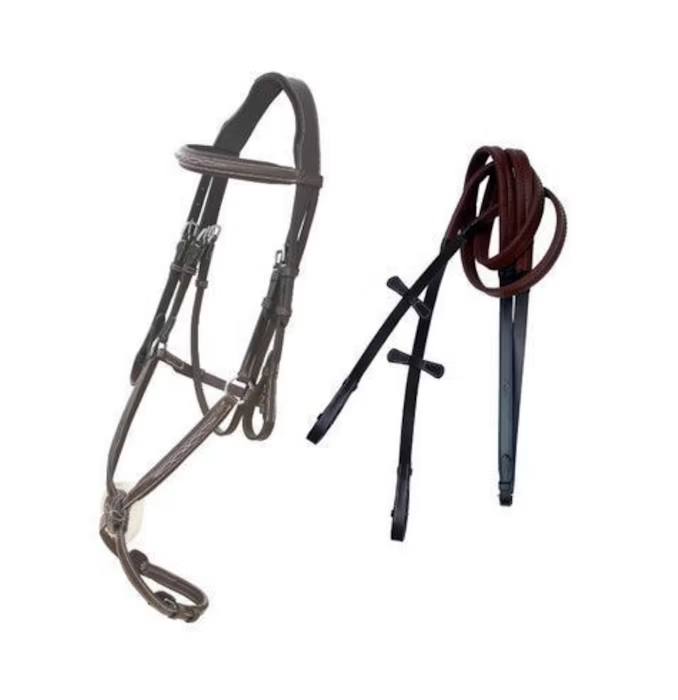
Hunter / Jumping Bridles
These bridles generally impart a traditional look to the horse. Hunter / Show Jumping
bridles come in different styles for the hunter show ring or show jumper ring. Hunter
Jumper bridles come in fancy stitch or simple plain noseband styles.
Weymouth or Double Bridle
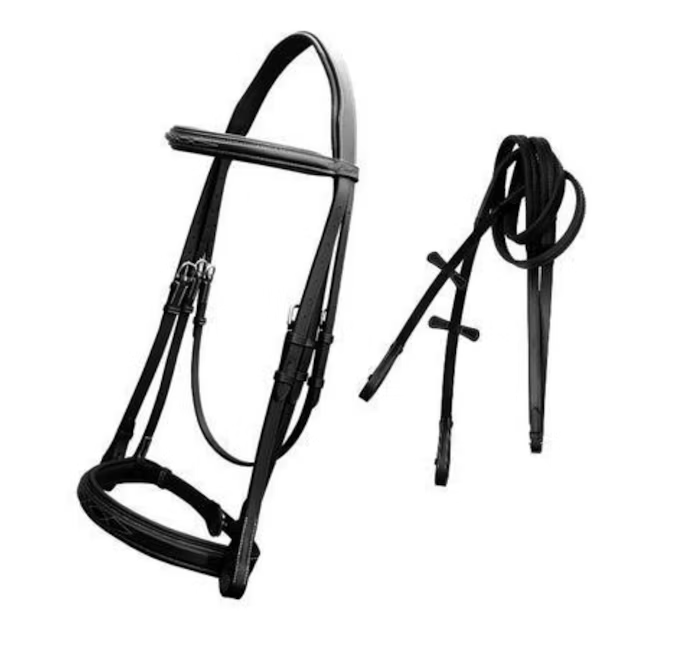
Weymouth or Double Bridle uses two bits at once, a small snaffle called a bradoon and
a curb or Weymouth bit, and requires the use of two sets of reins. Double bridles are usually only seen used in upper-level dressage, in Saddle seat riding,
and for showing in certain other events that require formal attire and equipment. In the right hands, this bridle can improve performance; in the wrong hands, it can seriously hurt the horse’s governing capacity. The Weymouth is practical for riding and racing in dressage and other ceremonial
equestrian games such as Eventing.
Bitless Bridle
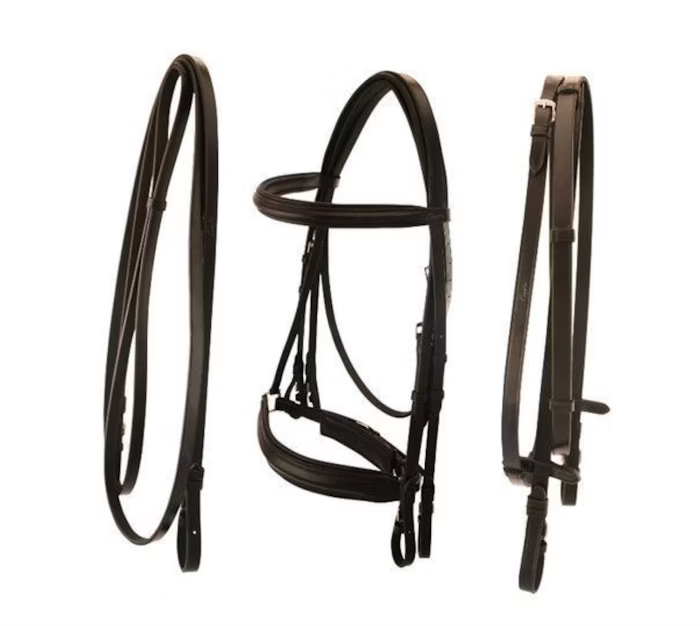
A bitless bridle is a general term describing a wide range of headgear for horses or other
animals that controls the animal without using a bit. Direction control may also be via a
noseband or cavesson if one is used. It might be used temporarily for the retraining of a horse that has been ridden by a
heavy-handed rider or has suffered a mouth injury. It might be used because a horse
has dental issues or difficulties tolerating a bit to such an extent that behavioural issues
developed. Other riders choose to use a bitless bridle for the overall comfort of the horse.
Drop Noseband Bridle
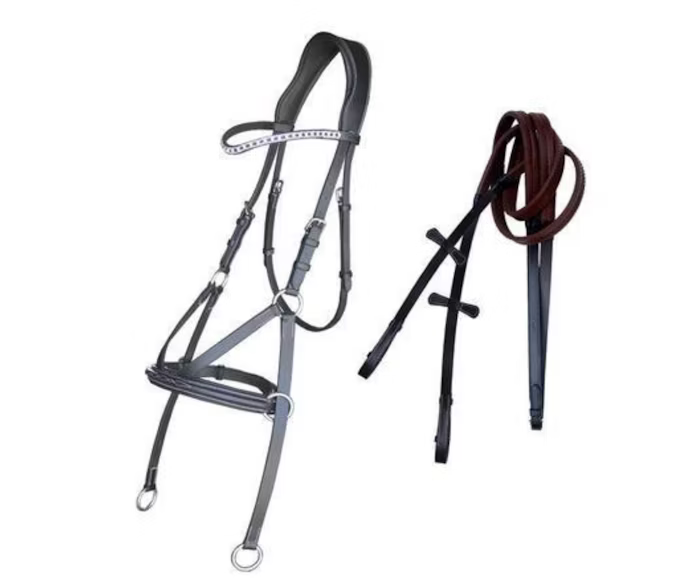
The snaffle bridle with a drop noseband can be used for dressage and eventing. The lower band or drop band is used to hold the horse’s mouth closed while riding. Using a drop noseband is not allowed in hunt seat competition. The drop noseband can be removed, converting the bridle to a snaffle bridle.
Types of reins
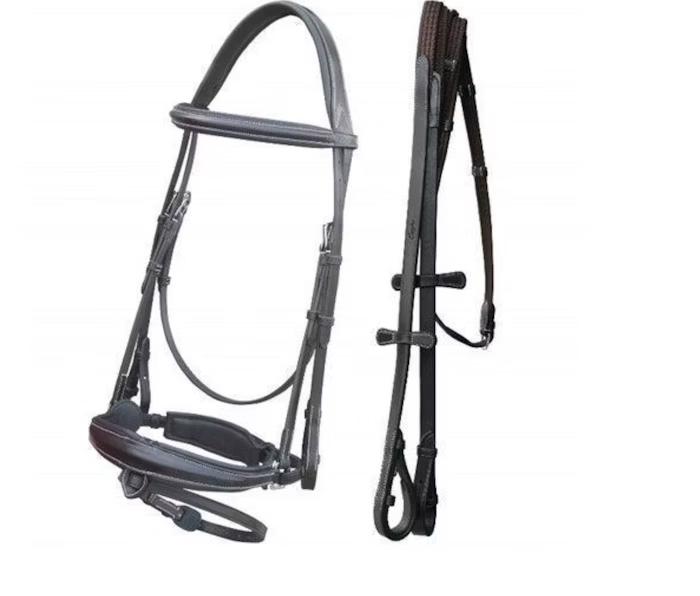
Horse reins create that all-important connection between a horse’s bit and a rider’s
hands. Most bridles come with reins that are appropriately styled to match the look and
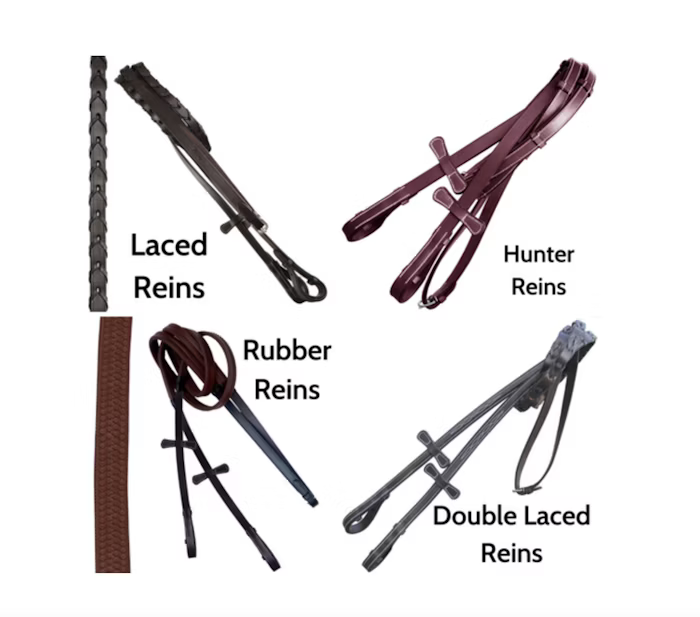
purpose of the bridle. English reins come in a variety of styles for Dressage, Hunter Jumper, or Endurance. Horse reins come in laced, rubber, web, or woven styles. All horse reins should match the color of the bridle they are being used with.
Laced reins
Laced reins are used for schooling or show, and present a classic look.
The leather is also laced to provide a better grip for the rider. Fancy raised laced
reins have a stitched raised section where the lacing ends. They are generally
used in America.
Rubber Reins
They are super grippy. The rider will feel more confident in
riding the horse using rubber reins. They are generally used more in the UK and Europe.
Side reins
They are used when longeing a horse, attached from the bit to the
saddle or surcingle, they are not meant to be held by the rider.
Hunter Reins
They are used with Hunter Bridles.
Plain Reins
As the name suggests, they are plain long straps of leather. They
impart a very elegant and classy look. It is generally used in Dressage. They can
get slippery when wet and hence, are generally replaced by Laced Reins.
If you want to know more about any bridle from Bridles and Reins, you can contact us on our
[email protected].
Originally posted on the Bridles and Reins Blog.






Leave A Comment
Recent Posts