By: Equicibus LLC
A Continuing Concern in the Stable
Step into a racing stable at dawn and you will often find the air thick with the scent of horses, hay, and the unmistakable sting of ammonia. Everytrainer takes pride in clean, well-kept stalls, and diligent mucking out is a daily routine. Yet the science is clear: dust, mold spores, and ammonia vapors have been documented repeatedly as key contributors to Inflammatory Airway Disease (IAD) in Thoroughbreds. Studies suggest that up to 80% of young Thoroughbreds in training show some degree of airway disease, making this one of the most widespread health concerns in the sport. Ammonia, in particular, forms within minutes of a horse urinating, and even the most rigorous cleaning schedule cannot prevent it from building up in the stable atmosphere.
And while the air itself may look harmless, its impact on the horse is anything but. The symptoms may be subtle at first: a horse that fades late in a workout, one that takes longer than expected to recover, or a scope that reveals excess mucus after exercise. Yet these small signs add up to something larger—measurable threats to performance and welfare.
“Even when you can’t see it, your horse is breathing it in.”

The Hidden Hazards in the Stable
The dangers inside a stall are not always visible. Dust particles, too small for the eye to see, remain suspended in the air long after a horse shifts in its bedding. The finest of these—known as PM₂.₅—are capable of traveling deep into the lungs, where oxygen exchange occurs. Once inhaled, they trigger inflammation, stimulate mucus production, and narrow the airways. Even mild cases of Inflammatory Airway Disease (IAD) can reduce oxygen uptake by 5–10%, a margin that can cost a Thoroughbred several lengths in a competitive race. And because oxygen fuels not only speed but also muscle repair and bone strength, horses compromised by dust fatigue sooner, recover more slowly, and are at greater risk of injury.
Compounding the problem is ammonia. Within minutes of a horse urinating, bacteria in the bedding begin breaking it down, releasing ammonia gas into the air. While a clean, well-managed stall is every trainer’s priority, science has shown that ammonia forms faster than even the best mucking can prevent. Prolonged exposure irritates the airways, making horses more
vulnerable to infection and IAD. Grooms, riders, and veterinarians are not immune either, often experiencing eye, throat, and respiratory irritation in barns where ammonia levels run high. Together, dust and ammonia create an invisible but persistent challenge to equine health and performance—one that demands a better solution.
The question has never been whether dust and ammonia are harmful; that truth has been established for years. The real challenge has been finding a stable management practice that addresses both dangers effectively.
“Oxygen fuels both speed on the track and recovery in the barn.”
Why Bedding Choice Matters
For generations, straw and wood shavings have been the go-to choices for stall bedding. But both materials continue to present the risks that veterinarians and researchers have warned us about. Straw breaks down into fine particles that fill the stable with dust, directly feeding the cycle of respiratory irritation. Wood shavings may appear cleaner at first, yet they, too, crumble over time, releasing irritants into the air and contributing to inflammation. And in both cases, urine seeps to the stall floor, where bacteria convert it into ammonia gas that horses and humans must breathe day after day.
These realities make bedding choice one of the most important—and often overlooked—determinants of stable air quality. A horse can be on the best feed, the best training program, and the best veterinary care, but if it is breathing dust and ammonia for 23 hours a day in its stall, its performance and long-term health will inevitably be compromised. Because a racehorse spends most of its day in the stall, bedding is not just a matter of tradition, but of welfare, performance, and longevity.
“When horses breathe cleaner air, they not only perform better—they stay training longer. That’s a win for the horse, the trainer, and the sport itself.”— HISA veterinary panel statement
That is why flax bedding is different—and why it matters.
Flax Bedding: The Equicibus Solution
This is where Equicibus flax bedding offers a practical, science-based answer. Most horsemen are already familiar with the flax plant (Linum usitatissimum) for its health benefits in flaxseed and flax oil. But beyond the seed lies another remarkable part of the plant: its sturdy stem. Inside that stem is the woody inner core, known as the shive. The long outer fibers of the stem have traditionally been used for linen, while the shive was once considered a byproduct. Yet it is here—in the core of the stem—that flax reveals its unique value as bedding.
The design of the stem itself is nature’s blueprint for absorption. In the living plant, the shive pulls moisture upward, feeding the leaves and seeds. When repurposed as bedding, those same woody fibers act like countless tiny sponges, drawing in and holding liquid far more effectively than straw or wood shavings. This natural capillary structure not only makes flax bedding exceptionally absorbent, but also allows the fibers to chemically bind liquid at the molecular level, locking it in place rather than letting it pool or seep. That distinction becomes critical when it comes to controlling ammonia, which we will return to shortly.
At Equicibus, we refine this natural advantage through a careful kindling process, where the long outer flax fibers are separated from the woody inner core. Once separated, the shives are chopped, cleaned, and thoroughly dust-extracted. Unlike straw or wood shavings, which inevitably break down into harmful airborne particles, flax shavings resist fragmentation, making them safer for horses prone to airway inflammation. Each batch is also heat-treated to eliminate bacteria and pathogens, ensuring a bedding material that is not only dust-free but also hygienic. And because flax is naturally hypoallergenic, it creates a stable environment that minimizes the risk of respiratory and skin reactions for even the most sensitive horses.
The second challenge—ammonia—is solved at the molecular level. Flax cell walls naturally contain hydroxyl groups that bind chemically with nitrogen compounds in urine. This prevents the bacterial conversion that produces ammonia gas. Rather than merely absorbing liquid, Equicibus flax bedding neutralizes the precursors of ammonia before they can escape into the stable air.
“Flax bedding binds urine at the molecular level—so ammonia never escapes.”
The result is a cleaner, healthier environment for both horses and humans.
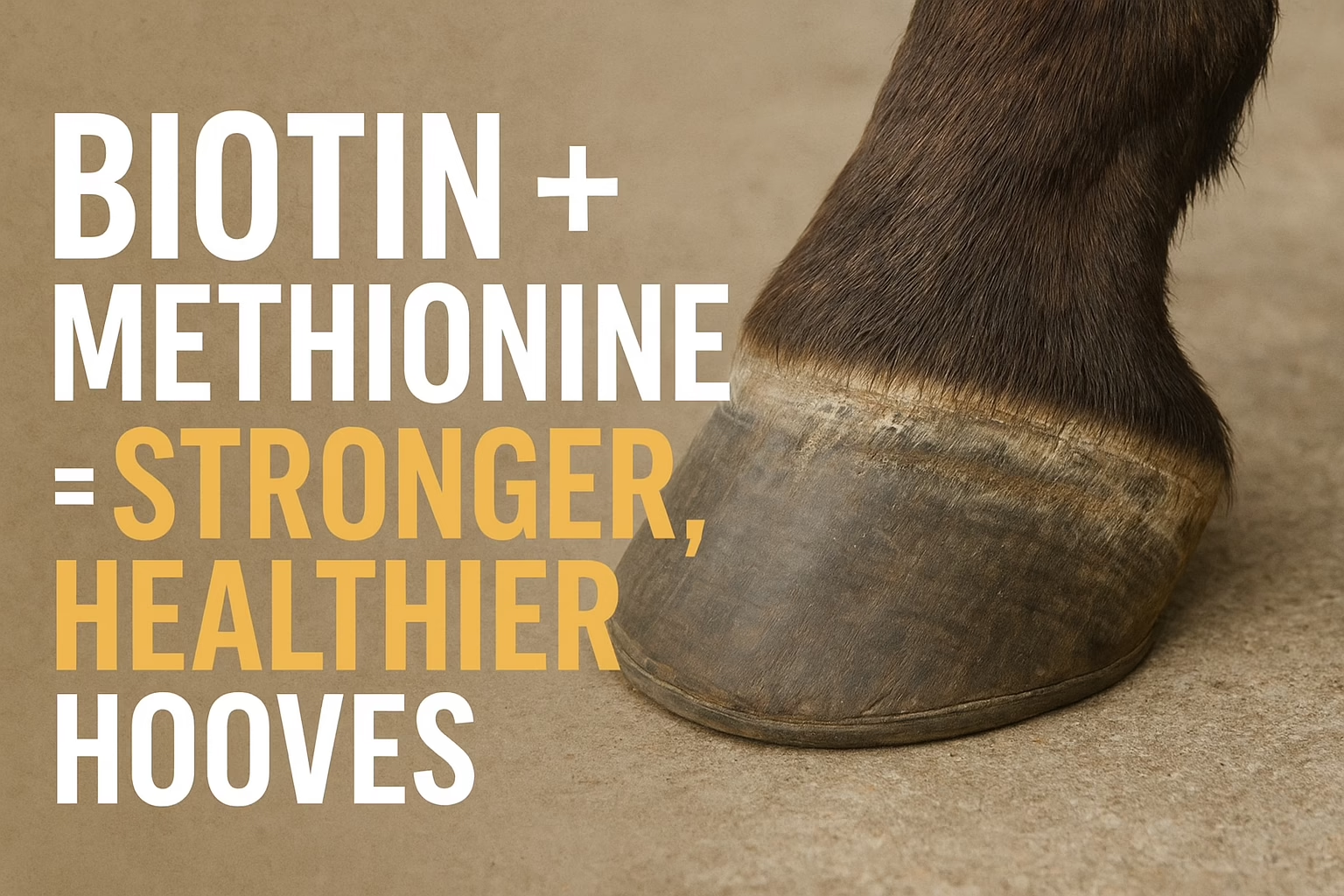
By removing both dust and ammonia, the health impact on the horse is noticeable within days to a week. Trainers and veterinarians often observe clearer airways, reduced irritation, and visible improvements in recovery times. As oxygen intake improves, horses gain greater stamina, bounce back faster from training, and show a steadier, more consistent effort. These early improvements compound over time, supporting not only performance on the track but also long-term durability and welfare. The benefits extend beyond respiratory protection. Flax compacts into a soft yet stable cushion underfoot, providing superior support compared to straw or shavings. This reduces concussion on joints and tendons, while the consistently dry surface helps prevent hoof problems such as thrush. Trainers using flax bedding report not only cleaner air and fewer respiratory issues, but also sounder horses that recover more quickly from training. In an industry where even minor gains in oxygen uptake or reductions in inflammation can translate into measurable performance advantages, these improvements matter.
Results for Trainers, Owners, and Racetracks
Trainers benefit first. With Equicibus flax bedding, horses remain more consistent in their training programs, missing fewer days due to respiratory irritation or hoof problems. That reliability means fewer unexpected gaps in conditioning, fewer late scratches, and a stronger ability to keep horses at peak performance. Reduced reliance on medications and fewer scopes also translates into lower veterinary costs and cleaner compliance under regulatory oversight.
For owners, the advantage is clear: a healthier horse stays in training, enters more races, and delivers on its athletic potential. Horses that avoid interruptions not only perform better on the track, but also retain greater long-term value, both in competition and eventually in breeding programs. Protecting the horse’s health ultimately protects the owner’s investment.
As earlier mentioned, up to 80% of young Thoroughbreds in training are affected by airway disease. That figure is not abstract—it represents a significant portion of the racing population performing below their full potential. A horse with even mild IAD may still train and compete, but its oxygen uptake is reduced, its recovery is slower, and its consistency is compromised. Multiply that across barns and across racetracks, and the result is fewer horses able to sustain training at the highest level.
Now imagine lowering that 80%. Even a modest reduction—say by 10–20%—would mean thousands more horses across the industry staying sounder, training more consistently, and entering races. For trainers, that translates to fuller barns with fewer setbacks. For racetracks, it means deeper entry boxes, stronger fields, and higher-quality races that draw more bettors and fans. By addressing the root causes of dust and ammonia, flax bedding gives the industry a practical way to strengthen its competitive base.
The financial benefits add to the case. Because flax is exceptionally absorbent, trainers require up to one-third less bedding per stall compared to straw or wood shavings, lowering supply costs across entire barns. That savings is substantial—not just trimming costs, but creating security and stability for barns, with the flexibility to reinvest in horses, staff, and training programs. Racetracks also realize savings on manure disposal, as soiled flax produces less bulk and decomposes faster. In Europe, composted flax bedding is returned to farmers to enrich the soil, closing the loop between racing and agriculture.
From the racetrack to the earth, the Thoroughbred and its flax bedding join forces to produce compost that renews and nourishes the soil.

Conclusion
Yet within these challenges lies an opportunity—an opportunity to embrace a solution that protects the horse, supports the trainer, strengthens the owner’s investment, and sustains the racing product itself.
Equicibus flax bedding provides that solution. By reducing dust, neutralizing ammonia, lowering bedding costs, and creating a sustainable cycle that returns value to the land, it addresses the most pressing concerns in one practical step. For the horse, it means better health and greater durability. For the trainer, it brings consistency and financial security. For the owner, it’s a safeguard value. And for racetracks, it ensures fuller fields, stronger competition, and a more compelling product for fans.
In a world where every detail matters, bedding is no longer a background choice—it is part of the foundation for racing’s future. By choosing flax, we take a meaningful step toward a healthier, more sustainable, and more successful industry.
Cleaner stalls. Sounder horses. Smarter racing. That is the Equicibuspromise.
Equicibus LLC2500 Airport Rd, Naples, FL 34112(239) (239) 431-1039 www.equicibus.com






Leave A Comment
Recent Posts