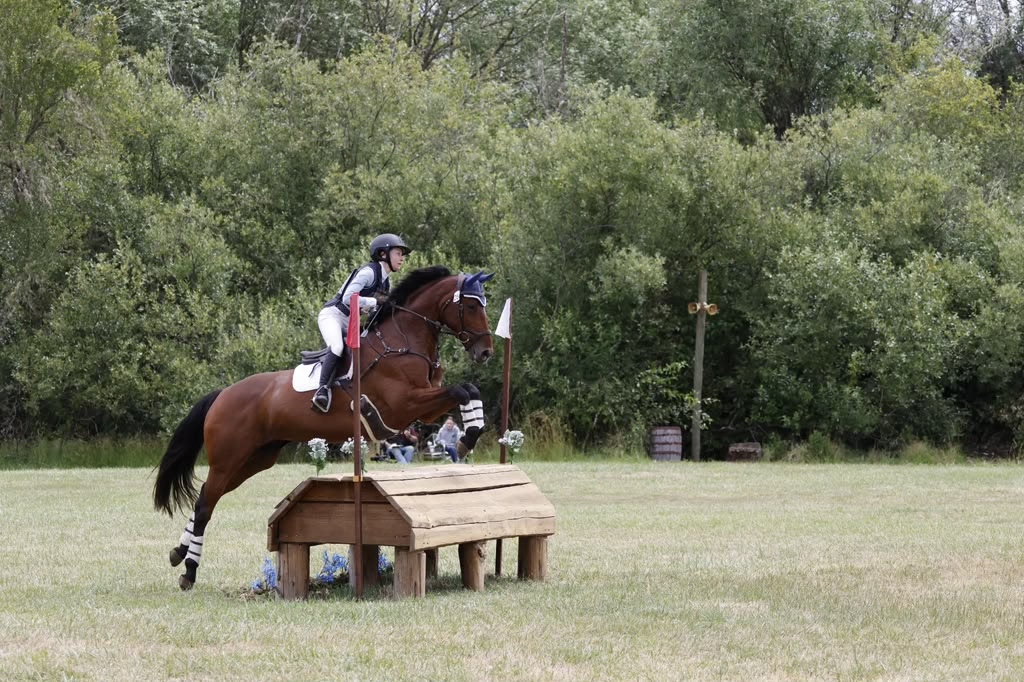

For decades, Inavale Horse Trials has been a cornerstone of West Coast eventing, attracting competitors from across the Pacific Northwest and beyond. The recent announcement that this June’s recognized horse trials would be its final event marks more than the loss of a competition venue. It represents the end of an era for USEA Area VII and the only recognized horse trials in Oregon.
For countless riders, trainers, owners, and volunteers, Inavale was more than a horse show. It was a community built around the sport of eventing, known for exceptional hospitality, beautifully maintained grounds, and a competition experience that embodied everything riders love about the discipline.
A Venue That Defined Eventing in Oregon
Growing up eventing in California, I remember hearing about Inavale Horse Trials long before I ever competed there. At its peak, the event regularly welcomed hundreds of horse and rider combinations. Under the leadership of Caroline, Luigi, and their dedicated team, Inavale became known throughout the country for delivering an outstanding competition experience year after year.
After relocating to Oregon in December 2021, I had the opportunity to compete at the venue during its final five recognized events. It quickly became one of my favorite competitions on the calendar.
The facility reminds me of many European event venues, featuring all three phases contested on grass, rolling terrain, thoughtfully designed cross country courses, and beautifully built show jumping tracks. Few venues capture the traditional spirit of eventing quite like Inavale.
Why Inavale Meant So Much
This year alone, I competed five horses across five different levels, including the newly introduced Modified division, while coaching 11 riders throughout the two day competition.
It was certainly a demanding weekend, but thanks to an incredible support team, everything came together seamlessly.
That experience perfectly reflects what eventing has always been about. Community.
The Trinity Eventing family, along with so many others throughout Area VII, deeply mourns the loss of Inavale Horse Trials. Its closure leaves a significant void in our competition calendar and in the identity of West Coast eventing.
West Coast Eventing Is at a Turning Point
While losing iconic venues is heartbreaking, change also creates opportunity.
Rather than focusing solely on what has been lost, we have an opportunity to rethink how recognized horse trials operate throughout the West Coast.
This is a call for the Area VII eventing community, including organizers, trainers, riders, owners, volunteers, and governing bodies, to work together toward sustainable solutions that keep more venues on the calendar.
The challenges facing our sport are real.
Why Eventing Entries Are Declining
Across the country, recognized horse trial entries have declined. Even major competitions that once maintained long wait lists have seen reduced participation.
The reasons extend well beyond entry fees.
Today’s competitors face increasing financial and personal pressures, including:
- Rising fuel costs
- Truck and trailer ownership expenses
- Boarding and training fees
- Veterinary and farrier costs
- Horse wellness and maintenance
- Lodging and travel expenses
- Limited paid time off from work
- School attendance requirements for junior riders
- Inflation and the increasing cost of everyday living
Participating in eventing requires a significant investment of both time and money. These realities affect not only riders but everyone connected to the equine industry.
Could One Day Horse Trials Be the Future?
One possible solution is restructuring the traditional three day recognized event into more one day and two day competitions.
This model offers benefits for both competitors and organizers.
Benefits for Riders
- Lower travel expenses
- Reduced lodging costs
- Less time away from work and school
- More opportunities to earn Minimum Eligibility Requirements, or MERs
- More frequent competition opportunities throughout the season
- Better development for young horses and riders
Benefits for Organizers
- Lower operating costs
- More flexible scheduling
- Increased stabling turnover
- Fresh volunteer pools each day
- Greater accessibility for new competitors
Imagine a calendar where recognized one day horse trials are available every other weekend throughout the Area VII season from May through October.
Much like successful models already utilized throughout the East Coast, these events could become an essential part of annual training plans while making recognized competition more attainable for more riders.
Individual venues could determine which competition levels to host each day, creating flexibility while maximizing participation and revenue opportunities.
The Impact Extends Beyond Competition
When a horse trials venue closes, the effects reach far beyond one weekend of competition.
Closures impact trainers and coaches, owners and riders, horses whose talents are best suited for eventing, veterinarians, farriers, boarding facilities, tack stores, feed suppliers, local equestrian businesses, and volunteers.
Healthy competition calendars support the entire equine economy. Every canceled event weakens that ecosystem.
Building a Sustainable Future for Area VII Eventing
The future of West Coast eventing depends on our willingness to evolve.
Preserving the traditions of our sport does not mean resisting change. It means adapting thoughtfully so future generations can continue to enjoy recognized horse trials, develop competitive horses, and strengthen the incredible community that makes eventing unique.
The loss of Inavale Horse Trials is deeply felt, but it can also become a catalyst for innovation.
If we want eventing to thrive across Oregon, Washington, California, and the greater West Coast, now is the time to rethink our approach, embrace sustainable competition models, and work together toward solutions that benefit riders, organizers, and the entire equestrian industry.
Because the future of West Coast eventing depends on what we choose to build next.
By Jennifer Wooten Macouzet of Trinity Eventing




Recent Posts